

Table of Contents
- Solar Energy Potential by Ontario Region
- Current Ontario Solar Incentives (2026)
- HRS Program vs Net Metering
- Net Metering in Ontario
- Ontario Electricity Rate Plans
- Financing Solar in Ontario
- Ontario Solar Costs & Savings
- The Solar Installation Process
- Choosing Solar Equipment
- Common Myths About Solar in Ontario
- Top-Rated Ontario Solar Installers
- Ontario Solar FAQ
Ontario is Canada's largest residential solar market, driven by rising electricity rates and one of the country's most generous incentive programs. With rates increasing nearly 30% in late 2025 and an all-in cost of 16 to 18 cents per kWh, the financial case for solar has never been stronger.
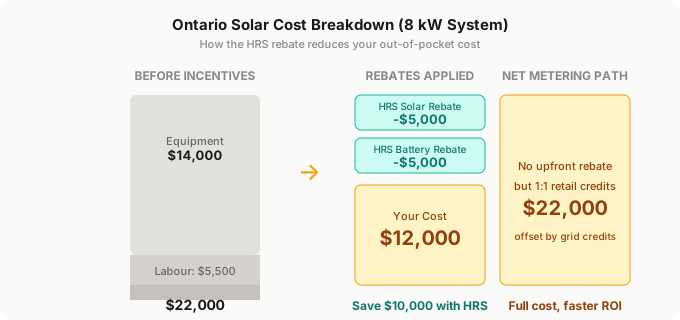
The province offers two distinct paths for solar homeowners: net metering under Ontario Regulation 541/05, which provides 1:1 retail rate credits for excess power exported to the grid, or the Home Renovation Savings (HRS) Program, which offers up to $5,000 for solar panels and $5,000 for battery storage but operates on a load-displacement model without grid export credits.
Ontario averages 1,100 to 1,250 kWh per kW of solar production annually depending on location, with the southern regions (Toronto, Ottawa, London) performing best. Combined with municipal PACE financing programs available in Toronto, Ottawa, Guelph, Hamilton, and expanding to more cities in 2026, solar is now accessible to most Ontario homeowners.
Whether you choose the net metering path or the HRS rebate path, this guide covers everything you need to know about going solar in Ontario - current costs, all available incentives, production estimates for your region, and how to find qualified installers.
Last Updated: April 2026
Key Takeaways
- Average 5 kW system cost: $12,100 - $17,500 before incentives
- HRS Program: Up to $5,000 solar + $5,000 battery ($10,000 total)
- Net metering: 1:1 retail rate credit, 12-month rollover (O. Reg. 541/05)
- Annual savings: $1,400 - $2,100 (depending on system size and rate plan)
- Payback period: 8 - 12 years (with incentives)
- 13% HST applies (no PST exemption)
- Ontario Electricity Rebate (OER): 23.5% discount on electricity bills
- Municipal PACE financing available in 5+ Ontario cities
Solar Energy Potential by Ontario Region
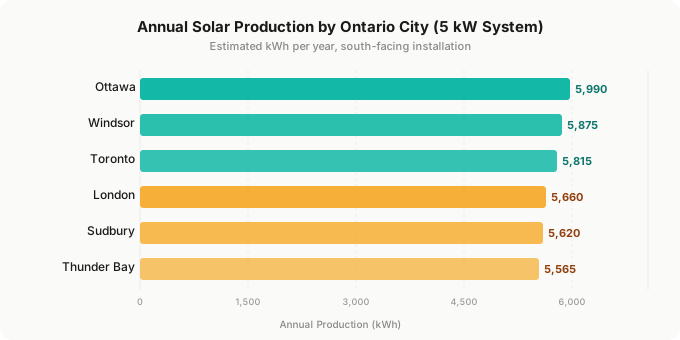
How much electricity a solar system produces across OntarioOntario receives between 1,100 and 1,250 kWh of solar production per kW of installed capacity annually, depending on your location. Southern Ontario (Toronto, Ottawa, Windsor, London) enjoys the highest production, while northern regions (Thunder Bay, Sudbury) receive slightly less but still produce strong returns.
| City | Peak Sun Hours | Annual kWh/kW | 5 kW System | 10 kW System | 15 kW System |
|---|---|---|---|---|---|
| Toronto | 3.19 | 1,163 | 5,815 kWh | 11,630 kWh | 17,445 kWh |
| Ottawa | 3.28 | 1,198 | 5,990 kWh | 11,980 kWh | 17,970 kWh |
| London | 3.10 | 1,132 | 5,660 kWh | 11,320 kWh | 16,980 kWh |
| Thunder Bay | 3.05 | 1,113 | 5,565 kWh | 11,130 kWh | 16,695 kWh |
| Sudbury | 3.08 | 1,124 | 5,620 kWh | 11,240 kWh | 16,860 kWh |
| Windsor | 3.22 | 1,175 | 5,875 kWh | 11,750 kWh | 17,625 kWh |
Monthly Production Profile (Toronto, 5 kW System)
| Month | kWh (5 kW system) | % of Annual |
|---|---|---|
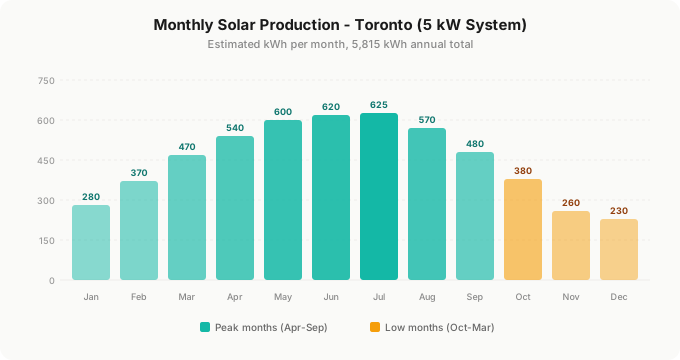
| January | 280 | 5% |
| February | 370 | 6% |
| March | 470 | 8% |
| April | 540 | 9% |
| May | 600 | 10% |
| June | 620 | 11% |
| July | 625 | 11% |
| August | 570 | 10% |
| September | 480 | 8% |
| October | 380 | 7% |
| November | 260 | 4% |
| December | 230 | 4% |
| Annual Total | 5,425 | 100% |
System Sizing Guidance
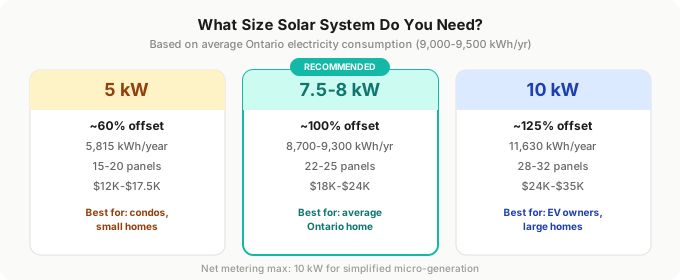
- Average Ontario home: ~9,000 - 9,500 kWh/year (OEB uses 700 kWh/month typical)
- 5 kW system: Covers ~60% of average consumption
- 7.5 - 8 kW system: Covers ~100% of average consumption
- 10 kW system: Maximum for simplified net metering micro-generation
Current Ontario Solar Incentives (2026)
Programs that save you money on solar in OntarioFederal Programs
| Program | Amount | Status |
|---|---|---|
| Canada Greener Homes Grant | Up to $5,000 | CLOSED (Feb 2024) |
| Canada Greener Homes Loan | Up to $40,000 at 0% | CLOSED (Oct 2025) |
| Canada Greener Homes Affordability Program | TBD | Check for 2026 updates |
Provincial Programs
| Program | Amount | Eligibility | Status |
|---|---|---|---|
| Home Renovation Savings (HRS) - Solar | $1,000/kW up to $5,000 | Existing homes, licensed contractor | ACTIVE (first-come, first-served) |
| Home Renovation Savings (HRS) - Battery | $1,000/kW up to $5,000 | Paired with solar or standalone | ACTIVE |
| Net Metering (O. Reg. 541/05) | 1:1 retail rate credit | Up to 10 kW micro-generation | ACTIVE |
| Ontario Electricity Rebate (OER) | 23.5% bill discount | All residential customers | ACTIVE |
Municipal PACE/LIC Programs
| City | Program | Max Amount | Type |
|---|---|---|---|
| Toronto | HELP (Home Energy Loan Program) | $125,000 | LIC on property tax |
| Ottawa | Better Homes Ottawa | $125,000 | LIC on property tax |
| Guelph | Guelph Energy Retrofit | $50,000 | LIC on property tax |
| Durham Region | Deep Retrofit | $10,000 | Grant |
| Hamilton | Home Efficiency Retrofit | $20,000 | LIC on property tax |
| Aurora | Launching 2026 | TBD | LIC |
| London | Launching 2026 | TBD | LIC |
HRS Program vs Net Metering
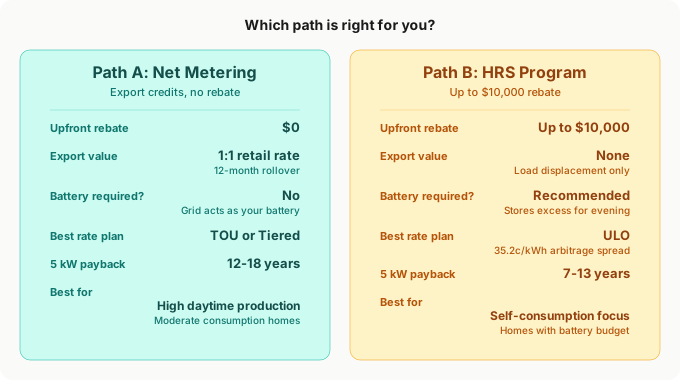
The most important decision for Ontario solar buyersThis is the most important decision Ontario solar buyers face. The two paths are generally mutually exclusive - you must choose one.
Path A - Net Metering (No Rebate)
- No upfront rebate
- Export excess to grid for 1:1 retail rate credit
- Credits roll forward 12 months then expire
- Simpler installation
- No battery required (but can add one)
- Best for: Homes with high daytime production and moderate consumption
Path B - HRS Program (Up to $10,000 Rebate)
- $5,000 solar + $5,000 battery rebate
- Load displacement model (no export credits)
- Battery stores excess for evening/peak use
- Higher upfront cost offset by rebate
- Best for: Homes that want to maximize self-consumption and have battery budget
ULO rate plan advantage: Charge battery overnight at 3.9¢/kWh, use during peak at 39.1¢/kWh = 35.2¢/kWh arbitrage spread.
Net Metering in Ontario
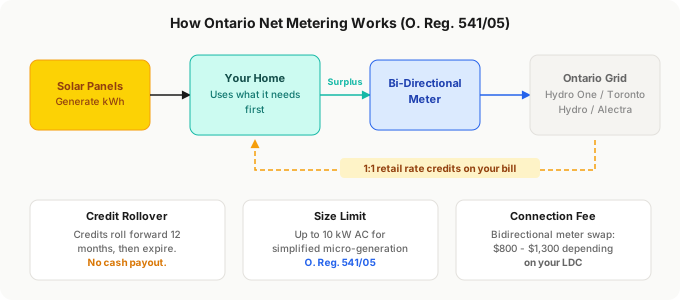
How you get paid for surplus solar electricity- Program: Ontario Regulation 541/05 under the Ontario Energy Board Act
- Credit: 1:1 at retail rate (on your current pricing plan - TOU, Tiered, or ULO)
- Rollover: Credits roll forward for 12 consecutive months, then zeroed - no cash payout
- Size limit: Up to 10 kW AC for micro-generation (simplified process)
- Meter: Bidirectional meter installed by your LDC. Connection fees typically $800 - $1,300
- Third-party ownership: Permitted since July 2022 (leasing, financing, PPA eligible)
- Battery: Can be paired with net metering
- Credit limits: Credits only offset electricity charges - not delivery, regulatory, or HST
- Fixed charges: Even with full offset, expect ~$40 - $50/month in fixed charges
- microFIT: Old feed-in tariff, closed to new applicants December 2017
Utility Comparison (Ontario's Big 3 LDCs)
| Utility | Service Area | Net Metering | Connection Fee |
|---|---|---|---|
| Hydro One | Rural/suburban Ontario | Yes, O. Reg. 541/05 | ~$1,000 - $1,300 |
| Toronto Hydro | City of Toronto | Yes, O. Reg. 541/05 | ~$800 - $1,000 |
| Alectra Utilities | GTA suburbs (Mississauga, Brampton, Hamilton, St. Catharines) | Yes, O. Reg. 541/05 | ~$900 - $1,100 |
Ontario Electricity Rate Plans
How your electricity pricing affects solar savingsOntario offers three electricity pricing plans. Your choice affects the value of your solar production and battery strategy.
Time-of-Use (TOU) - Default
| Period | Rate |
|---|---|
| On-peak (weekdays 4-9pm) | 20.3¢/kWh |
| Mid-peak (weekdays 7am-4pm, 9pm-11pm) | 15.7¢/kWh |
| Off-peak (nights, weekends, holidays) | 9.8¢/kWh |
Solar value: Panels produce during mid-peak hours, net metering credits offset on-peak usage.
Tiered
| Tier | Rate |
|---|---|
| Tier 1 (first 1,000 kWh winter / 600 kWh summer) | 12.0¢/kWh |
| Tier 2 (above threshold) | 14.2¢/kWh |
Solar value: Reduces your consumption, keeping you in cheaper Tier 1 longer.
Ultra-Low Overnight (ULO)
| Period | Rate |
|---|---|
| Overnight (11pm-7am) | 3.9¢/kWh |
| Mid-peak | 12.5¢/kWh |
| Weekday on-peak (4-9pm) | 39.1¢/kWh |
| Weekend off-peak | 9.8¢/kWh |
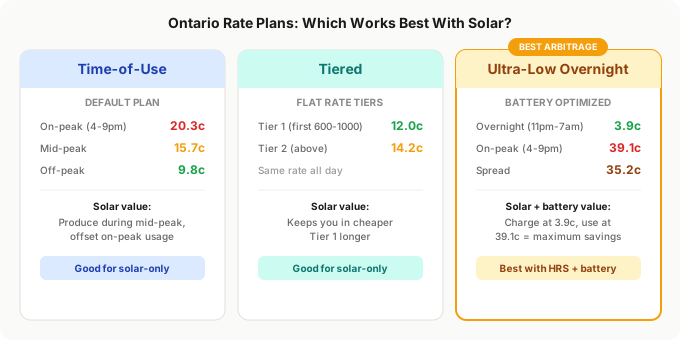
Solar + battery value: Charge battery overnight at 3.9¢, use during peak at 39.1¢ = 35.2¢/kWh arbitrage. Best combined with HRS battery rebate.
Financing Solar in Ontario
How to pay for your system with little or no upfront costOntario has the most developed PACE financing landscape in Canada, giving homeowners multiple paths to go solar with little or no upfront cost.
- PACE/LIC programs: Property-tax-attached loans in Toronto ($125K), Ottawa ($125K), Guelph ($50K), Hamilton ($20K), Durham ($10K grant)
- HELOC: Home equity lines of credit (typical 6-8% variable)
- Installer financing: Many Ontario installers offer 0% or low-interest financing plans
- Enbridge Green Home financing: Check current availability
Monthly Payment Example
A 7.5 kW system at $21,375 with $5,000 HRS rebate = $16,375 financed. At 5% over 15 years via PACE = ~$130/month. Average monthly electricity savings of $150 - $175 means the system is cash-flow positive from month one.
Ontario Solar Costs & Savings
What you'll pay and what you'll save after incentives| 5 kW System | 8 kW System | 10 kW System | |
|---|---|---|---|
| Gross cost (before incentives) | $12,100 - $17,500 | $19,360 - $28,000 | $24,200 - $35,000 |
| HRS rebate (if eligible) | -$5,000 | -$5,000 | -$5,000 |
| Net cost (after HRS) | $7,100 - $12,500 | $14,360 - $23,000 | $19,200 - $30,000 |
| Annual production | ~5,815 kWh | ~9,304 kWh | ~11,630 kWh |
| Annual savings (at 17¢/kWh) | ~$990 | ~$1,580 | ~$1,975 |
| Payback (with HRS) | 7 - 13 years | 9 - 15 years | 10 - 15 years |
| Payback (no HRS, net metering) | 12 - 18 years | 12 - 18 years | 12 - 18 years |
| 25-year savings | ~$24,750 | ~$39,500 | ~$49,375 |
Note: Payback calculations use 17¢/kWh blended all-in rate. Actual savings depend on your rate plan (TOU vs Tiered vs ULO), consumption pattern, and whether you choose HRS or net metering path.
The Solar Installation Process in Ontario
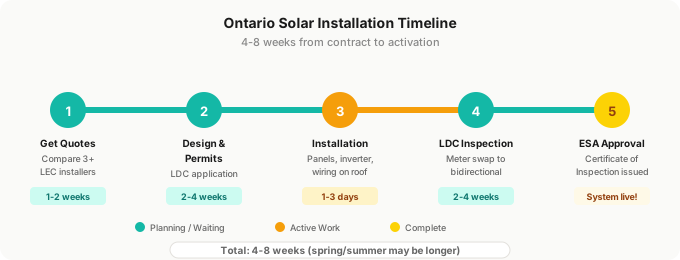
From first quote to flipping the switchInstalling solar in Ontario typically takes 4 to 8 weeks from signing a contract to system activation. Here is what to expect:
- Get quotes and choose installer: Compare at least 3 quotes from Licensed Electrical Contractors (LEC). Verify ECRA/ESA licensing.
- System design and permits: Your installer designs the system, applies for building permits, and submits your LDC (Local Distribution Company) application for net metering or connection.
- Installation (1-3 days typical): Panels, inverter, and wiring installed on your roof. Most residential installs complete in 1 to 3 days.
- LDC inspection and bidirectional meter: Your utility (Hydro One, Toronto Hydro, Alectra, etc.) inspects the installation and swaps your meter for a bidirectional one.
- ESA approval and system activation: The Electrical Safety Authority (ESA) inspects and issues the Certificate of Inspection. Your system goes live.
Choosing Solar Equipment for Ontario
Panels, inverters, and batteries for Ontario's climateSolar Panels
Modern residential panels are typically 400-450W monocrystalline modules. For Ontario's climate, look for:
- Snow load rating: Minimum 5,400 Pa for Ontario snow loads
- Temperature coefficient: Lower is better - panels lose efficiency in summer heat. Look for -0.30%/°C or better
- Warranty: 25-year product and performance warranty is standard for tier-1 manufacturers
- Popular brands in Ontario: Canadian Solar (Ontario-made), Silfab (Ontario-made), Q Cells, REC, Longi
Inverters
- String inverters: Most affordable option. Good for roofs with consistent sun exposure. Brands: Fronius, SMA, SolarEdge
- Microinverters: Best for roofs with shade or multiple orientations. Higher cost but per-panel optimization. Brands: Enphase, AP Systems
- Hybrid inverters: Required if adding battery storage. Brands: Sol-Ark, Enphase IQ Battery, Tesla Powerwall
Battery Storage
Batteries are increasingly popular in Ontario, especially with the HRS $5,000 battery rebate and ULO rate plan. Common options:
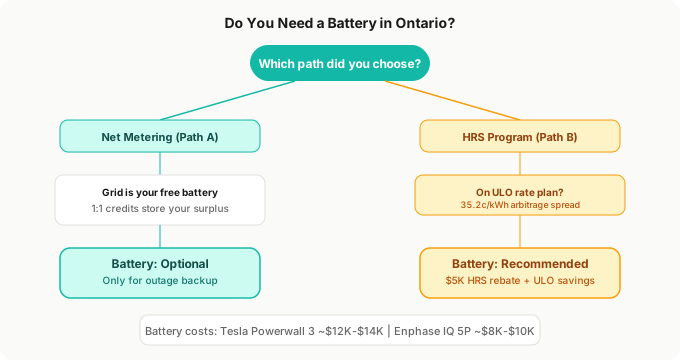
- Tesla Powerwall 3: 13.5 kWh, integrated inverter, ~$12,000-$14,000 installed
- Enphase IQ Battery 5P: Modular 5 kWh units, ~$8,000-$10,000 per unit installed
- Sonnen ecoLinx: Premium option, 10-20 kWh, smart energy management
Common Myths About Solar in Ontario
Separating fact from fiction about solar in Ontario"Ontario doesn't get enough sun for solar"
Ontario averages 1,100 - 1,250 kWh/kW annually. Toronto gets more peak sun hours than many German cities, and Germany is one of the world's largest solar markets.
"Solar panels don't work in winter"
Panels actually operate more efficiently in cold weather. Snow slides off most installations naturally, and production drops are offset by Ontario's highest TOU rates being in winter evenings - exactly when you're drawing from battery or credits.
"Ontario electricity is too cheap for solar to make sense"
With the 2025 rate increase, all-in costs are now 16 - 18¢/kWh blended. On ULO, peak rates hit 39.1¢/kWh. Solar payback periods have shortened significantly.
"You need the HRS rebate to make solar worthwhile"
Net metering without HRS still delivers 12 - 18 year payback, with 25-year savings of $25,000 - $50,000. The HRS rebate accelerates payback but isn't required.
"Net metering credits are worth less than what you pay"
Ontario net metering provides full 1:1 retail rate credits. Your credits offset at the same rate you pay, including TOU pricing.
Ready to compare Ontario solar quotes?
Connect with top-rated local installers and get free, no-obligation quotes for your home.
Top-Rated Ontario Solar Installers
Verified Ontario solar companiesOntario has one of Canada's most competitive solar installer markets. Look for Licensed Electrical Contractors (LEC) with ECRA/ESA certification. Here are some of the province's top-rated companies:
Polaron Solar
One of Canada's largest residential solar installers, headquartered in Ontario. Known for end-to-end service including financing options, system design, installation, and monitoring. Extensive experience across the GTA and southern Ontario.
SkyFire Energy
A leading Canadian solar installer with operations across Ontario. Offers residential, commercial, and utility-scale installations. Strong track record with net metering and battery storage systems.
Solar Ontario
Ontario-focused installer offering customized residential and commercial solar solutions. Experienced with both the HRS program and net metering applications across multiple LDC service territories.
When choosing an installer, verify:
- ECRA/ESA Licensed Electrical Contractor status
- WSIB coverage
- Experience with your specific LDC (Hydro One, Toronto Hydro, Alectra, etc.)
- Familiarity with HRS program application process
- Minimum 3 references from Ontario installations
Ready to Go Solar in Ontario?
Get personalized quotes from top Ontario installers. Compare costs, incentives, and financing options - free, with no obligation.
Get Your Free Ontario Solar QuoteOntario Solar FAQ
Answers to the most common questions from Ontario homeownersHow much do solar panels cost in Ontario in 2026?
A typical 5 kW residential system costs $12,100 to $17,500 before incentives. With the HRS rebate of $5,000, net cost drops to $7,100 to $12,500. Ontario's competitive installer market keeps prices near the national average of $2.42 to $3.50 per watt.
What is the Home Renovation Savings (HRS) Program?
The HRS Program offers up to $5,000 for solar panel installation and up to $5,000 for battery storage. It is administered through Save on Energy and is available to existing homeowners who use a licensed contractor. The program is first-come, first-served and funded through late 2026.
Should I choose net metering or the HRS rebate?
This depends on your situation. Net metering gives you 1:1 retail rate credits for excess power but no upfront rebate. HRS gives you up to $10,000 in rebates but operates on load displacement without grid export credits. A qualified installer can model both scenarios for your specific consumption pattern.
How does net metering work in Ontario?
Under Ontario Regulation 541/05, your solar system feeds excess power to the grid and you receive credits at your retail electricity rate. Credits roll forward for 12 months and then reset to zero. The program covers systems up to 10 kW for simplified micro-generation.
Which Ontario electricity rate plan is best for solar?
For solar without battery, Tiered or TOU plans work well since solar production during midday offsets your consumption. For solar with battery, the Ultra-Low Overnight (ULO) plan offers the best arbitrage - charge your battery at 3.9 cents overnight and use it during peak hours at 39.1 cents.
How much electricity will solar panels produce in Ontario?
A 5 kW system in Toronto produces approximately 5,815 kWh per year. Ottawa produces slightly more at 5,990 kWh. Most Ontario homes use 9,000 to 9,500 kWh annually, so a 7.5 to 8 kW system typically covers 100% of consumption.
Are there municipal incentives for solar in Ontario?
Several Ontario cities offer PACE (Property Assessed Clean Energy) financing. Toronto's HELP program offers up to $125,000, Ottawa's Better Homes program up to $125,000, and Guelph up to $50,000. These are repaid through your property tax bill. More cities are launching programs in 2026.
How long is the payback period for solar in Ontario?
With the HRS rebate, typical payback is 7 to 13 years for a 5 kW system. Without the rebate using net metering, payback extends to 12 to 18 years. Rising electricity rates and the 25+ year lifespan of panels mean lifetime savings of $25,000 to $50,000.
Do I need a battery with solar panels in Ontario?
A battery is not required but can increase your self-consumption and qualify you for the $5,000 HRS battery rebate. Batteries are particularly valuable on the ULO rate plan where the spread between overnight and peak rates is 35.2 cents per kWh. Without a battery, net metering handles your excess production.
What happens to my solar credits if I switch rate plans?
Net metering credits transfer if you switch between TOU, Tiered, or ULO plans. The credits are applied at whatever rate you are currently on. However, if you enrolled in the HRS program, you cannot also participate in net metering - this is a one-time decision made at installation.
Incentive amounts, program eligibility, and electricity rates referenced in this guide are current as of April 2026 and subject to change. Verify details with your LDC, the Ontario Energy Board, or Save on Energy before making financial decisions.
Solar resources by province
Incentives, installers, and costs specific to your region


