
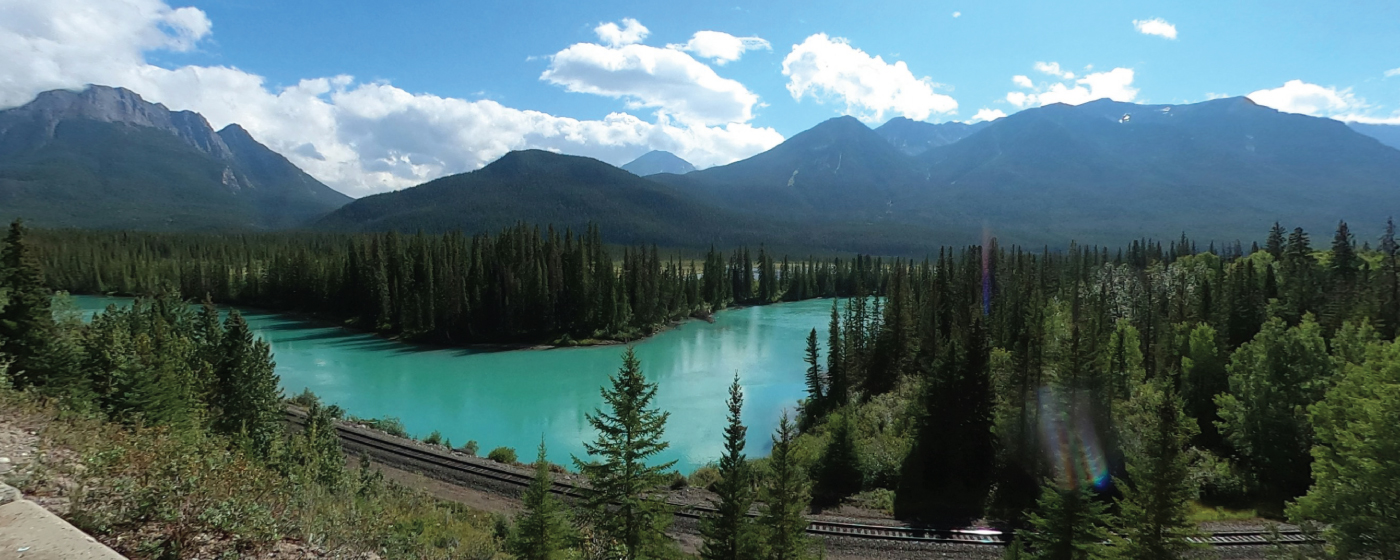
Alberta has the best solar potential in Canada. With over 300 sunny days per year in southern regions, a deregulated electricity market that lets you choose your retailer, and innovative programs like the Clean Energy Improvement Program (CEIP) and Solar Club rate switching, Alberta homeowners can generate significant savings from solar. No provincial sales tax on equipment and retail-rate net metering credits make the financial case even stronger.
Last Updated: April 2026
Solar Guide Table of Contents
- Solar Energy Potential by Alberta Region
- Current Alberta Solar Incentives (2026)
- Municipal Solar Incentives
- Net Metering in Alberta (Micro-Generation)
- CEIP & Municipal Solar Rebates
- Financing Solar in Alberta
- Alberta Solar Costs & Savings
- The Solar Installation Process
- Choosing Solar Equipment
- Common Myths About Solar in Alberta
- Top-Rated Alberta Solar Installers
- Alberta Solar FAQ
Key Takeaways for Alberta Solar in 2026
- Average system cost: $12,500–$15,500 for a typical 5 kW system (GST only - no PST)
- Available programs: CEIP property-tax financing (23+ municipalities) + municipal rebates (Banff up to $9,000)
- Annual savings: $1,200–$1,800 based on 22–24¢/kWh all-in electricity cost
- Payback period: 7–10 years, with 15–20 additional years of free electricity
- Net metering: Retail-rate credits under Micro-Generation Regulation - or up to 33–35¢/kWh with Solar Club
Use our solar calculator to see what these numbers look like for your specific home.
Solar Energy Potential by Alberta Region
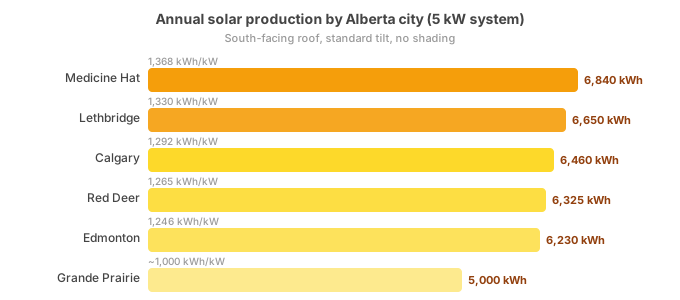
How much energy can your solar panels produce in Alberta?Alberta’s solar resource varies significantly from south to north, but even Edmonton in the central part of the province outperforms most of Ontario and all of Atlantic Canada. Southern Alberta - particularly Medicine Hat and Lethbridge - has the highest solar potential in all of Canada, with peak sun hours comparable to parts of California.
Annual Solar Production by City
| City | kWh/kW | 5 kW System | 10 kW System | 15 kW System |
|---|---|---|---|---|
| Medicine Hat | 1,368 | 6,840 kWh | 13,680 kWh | 20,520 kWh |
| Lethbridge | 1,330 | 6,650 kWh | 13,300 kWh | 19,950 kWh |
| Calgary | 1,292 | 6,460 kWh | 12,920 kWh | 19,380 kWh |
| Red Deer | 1,265 | 6,325 kWh | 12,650 kWh | 18,975 kWh |
| Edmonton | 1,246 | 6,230 kWh | 12,460 kWh | 18,690 kWh |
| Grande Prairie | ~1,000 | 5,000 kWh | 10,000 kWh | 15,000 kWh |
Estimates based on NRCan PV potential data. South-facing installations, standard tilt, no shading. Medicine Hat and Lethbridge have the highest solar potential in Canada.
Monthly Production Breakdown
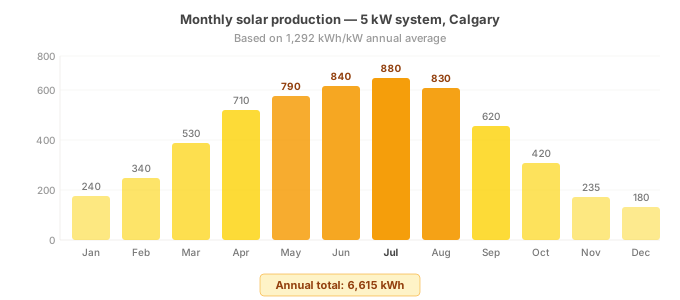
Solar production in Alberta peaks from May through August, when long summer days deliver over 12 hours of usable sunlight. Winter months produce less, but Alberta’s cold, clear skies keep panels efficient even in December and January.
| Month | Production (kWh) | % of Annual |
|---|---|---|
| January | 240 | 4% |
| February | 340 | 5% |
| March | 530 | 8% |
| April | 710 | 11% |
| May | 790 | 12% |
| June | 840 | 13% |
| July | 880 | 13% |
| August | 830 | 13% |
| September | 620 | 9% |
| October | 420 | 6% |
| November | 235 | 4% |
| December | 180 | 3% |
| Total | 6,615 | 100% |
Monthly estimates for a 5 kW system in Calgary (1,292 kWh/kW annual average).
System Sizing for Alberta Homes
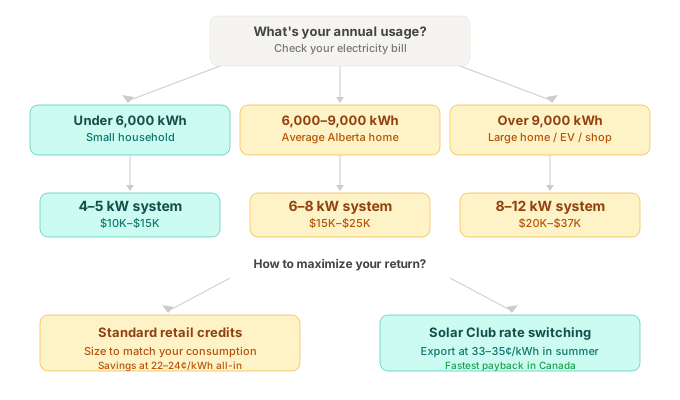
A typical Alberta home uses about 7,200 kWh per year. A 5 kW system in Calgary covers roughly 90% of that; in Medicine Hat or Lethbridge, the same system covers 95% or more. Under Alberta’s Micro-Generation Regulation, your system must be sized to match your annual consumption - oversizing for maximum export is not permitted. A 6–8 kW system is the sweet spot for most Alberta homes.
Current Alberta Solar Incentives (2026)
Programs and tax advantages available to Alberta homeownersAlberta doesn’t have a provincial solar rebate like BC or Ontario, but the financial picture is still strong. A combination of GST-only taxation (no PST), municipal rebate programs, CEIP financing, and the unique Solar Club rate-switching program makes Alberta one of the best provinces for solar returns.
| Program | Amount | Eligibility |
|---|---|---|
| Micro-Generation (Net Billing) | Retail rate credits | All grid-connected systems under 5 MW |
| Solar Club Rate Switching | 33–35¢/kWh export (HI rate) | Grid-connected systems under 150 kW |
| CEIP (Property Tax Financing) | Up to 100% financed | 23+ participating municipalities |
| Banff Solar Incentive | $450/kW (up to $9,000) | Banff residential properties |
| Canmore Solar Incentive | $1,250 per home | Min 3 kW system, lottery selection |
| No PST in Alberta | GST only (5%) | All installations |
Municipal Solar Incentives in Alberta
City-level rebates and programs that stack on top of provincial benefitsSeveral Alberta municipalities offer direct solar rebates or enhanced CEIP terms. These programs change frequently and are often oversubscribed, so check eligibility early and apply as soon as application windows open.
Banff Solar Incentive Program
Banff offers one of the most generous municipal solar rebates in Canada: $450/kW for residential systems (up to 20 kW max = $9,000 maximum rebate) and $750/kW for commercial installations (up to $20,000). The 2026 application window runs from February 2 through March 31. Requirements include a minimum 2 kW system, CSA/ULC approved equipment, and a completed Microgeneration Agreement with FortisAlberta. Building permits are required but permit fees are waived for solar. If applications exceed available funding, selections are made by lottery.
Canmore Solar Incentive
Canmore provides 20 incentives of $1,250 each for homeowners installing rooftop systems of at least 3 kW. Like Banff, selections are made by lottery when applications exceed funding. The 2026 application window runs February 2 through March 31.
Medicine Hat (HAT Smart)
Medicine Hat’s HAT Smart program offers $200/kW up to $1,000 for residential solar installations. The program is currently closed but expected to reopen sometime in 2026. An EnerGuide rating is required to qualify.
Wetaskiwin
Wetaskiwin offers five $5,000 grants for businesses and non-profits installing minimum 5 kW solar systems. Availability is limited and first-come, first-served.
St. Albert
St. Albert provides a $1,400 CEIP incentive that’s applied directly to reduce the amount financed through property taxes, lowering your overall repayment cost.
Other Participating Municipalities
Edmonton, Calgary, Airdrie, Lethbridge, Spruce Grove, and many other municipalities participate in the CEIP program but may not offer additional direct cash rebates. Check your municipality’s CEIP page for current status, interest rates, and any local top-up incentives.
Ready to see what incentives you qualify for?
Get quotes from Alberta installers who know every available program in your municipality.
Net Metering in Alberta (Micro-Generation)
How Alberta’s deregulated market works in your favorHow Alberta’s Micro-Generation Works
Alberta’s electricity market is deregulated - there’s no single utility like BC Hydro. Instead, you choose your electricity retailer, and your wire service provider (FortisAlberta, ENMAX Power, EPCOR Distribution, or ATCO Electric) handles the physical delivery.
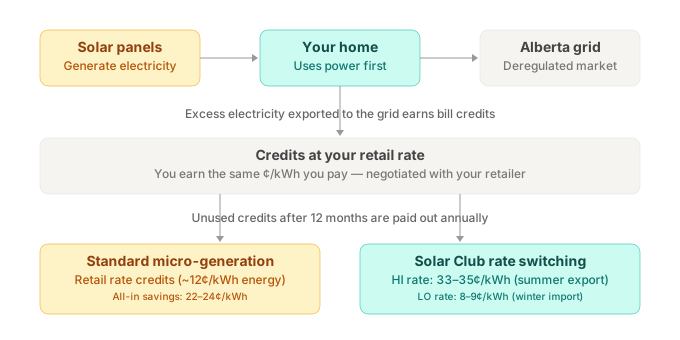
Under the Micro-Generation Regulation, any grid-connected system under 5 MW qualifies. Small micro-generators (under 150 kW - which includes all residential) receive credits at their retail rate. You earn the same rate you pay. Credits offset your bill monthly, and unused credits after 12 months are paid out annually.
Free interconnection: your wire service provider installs a bidirectional meter at no cost. No connection fees, no meter charges.
System sizing: your system must be sized to match your annual consumption. Oversizing for maximum export is not permitted under the regulation.
Solar Club - Rate Switching for Maximum Returns
Solar Club (by Utility Network & Partners Inc.) is a rate program unique to Alberta. It lets micro-generators switch between a high export rate (~33–35¢/kWh) during sunny months and a low import rate (~8–9¢/kWh) during winter. You can switch with 10 days’ notice, as often as you want.
The math: During summer, when you’re exporting surplus at 33¢/kWh instead of the standard 12¢, your export revenue nearly triples. During winter, you import at 8–9¢ instead of 12¢. Combined, this can cut your payback period by 2–3 years compared to standard micro-generation.
Solar Club also offers 3% cash back on electricity and natural gas. The program has 92 Google reviews at 5.0 stars as of April 2026.
Not every retailer offers this structure. Ask your installer about Solar Club or similar rate-switching programs when comparing quotes.
CEIP & Municipal Solar Rebates
Alberta’s primary solar incentive: $0-down financing through your property taxClean Energy Improvement Program (CEIP)
The CEIP is Alberta’s PACE (Property Assessed Clean Energy) financing program. It lets homeowners finance 100% of their solar installation through their property taxes, with no money down and repayment terms up to 25 years. The financing stays with the property, not the owner - if you sell your home, the remaining balance transfers to the new owner. For Edmonton residents, see our detailed guide on Edmonton's CEIP property tax financing program.
Over 23 municipalities currently participate in CEIP, including Edmonton, Calgary, Airdrie, Lethbridge, Spruce Grove, Okotoks, and others. Interest rates vary by municipality - Calgary’s rate is approximately 5.66–5.75% as of early 2026.
How CEIP Works
Once your installation is complete and inspected, your municipality adds the cost to your property tax assessment. You repay through your regular property tax bill, typically adding $100–$200/month depending on system size and term length. Since your solar savings often offset most of this increase, many homeowners are cash-flow neutral or positive from day one.
Municipal Rebate Stacking
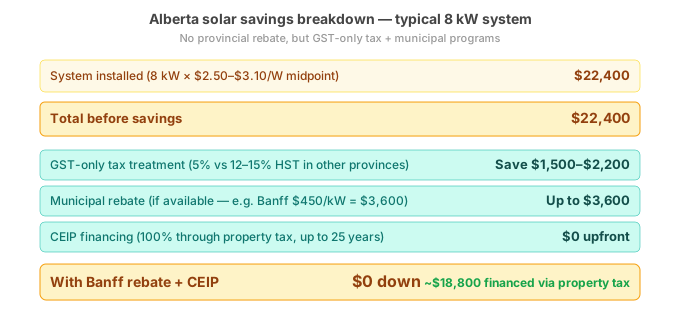
In municipalities that offer both CEIP and a direct rebate (like Banff or St. Albert), you can stack the programs. For example, a Banff homeowner could receive a $3,600 rebate on an 8 kW system and finance the remaining $18,800 through CEIP - paying $0 upfront.
Pro tip: Unlike BC or Ontario where you get cash rebates, Alberta’s primary incentive is CEIP financing - $0 down, repaid through your property tax. Combined with a municipal rebate (like Banff’s $450/kW), you can go solar with minimal out-of-pocket cost.
Financing Solar in Alberta
How to pay for your solar system with the best return on investmentCEIP Property Tax Financing
CEIP is the headline financing option for Alberta solar. Unlike a traditional loan, CEIP financing is tied to your property - not your personal credit. This means no credit check, no upfront cost, and if you sell your home, the remaining payments transfer to the new owner. Over 23 municipalities participate, with terms up to 25 years and interest rates around 5.66–5.75% (Calgary, 2026).
The math: A $22,000 system financed through CEIP over 20 years at 5.7% adds about $160/month to your property tax. If your solar saves $150/month in electricity, you’re nearly cash-flow neutral from day one - and after the CEIP term ends, you enjoy 5–10 more years of free electricity from your panels.
Home Equity Line of Credit (HELOC)
A HELOC typically offers lower interest rates (prime + 0.5–1.5%) than CEIP, making it a good option if you have available equity. Interest may be tax-deductible if the system is used for a rental property. The downside: HELOC rates are variable, and the debt stays with you if you sell.
Installer Financing
Many Alberta installers offer their own financing plans, sometimes with promotional 0% interest for 12–24 months. Always compare the total cost (including fees and deferred interest) against CEIP and HELOC options before committing.
Cash Purchase
Paying cash eliminates interest costs entirely, giving you the fastest payback and highest lifetime return. A 5 kW system at $14,000 cash with $1,500/year in savings delivers a payback in under 10 years and 15+ years of pure profit. That’s a better return than most GICs or bonds.
Alberta Solar Costs & Savings
What you’ll pay and what you’ll save after all available Alberta incentivesSolar costs in Alberta are competitive nationally, and the absence of PST (you pay only 5% GST) gives Alberta an immediate cost advantage over provinces with HST. The table below shows estimated costs and savings for three common residential system sizes, factoring in municipal rebates where available.
| System Size | Cost Before Incentives | Municipal Rebate (Banff) | Net Cost | Annual Savings | Payback Period |
|---|---|---|---|---|---|
| 5 kW | $12,500–$15,500 | Up to $2,250 | $10,250–$13,250 | $1,200–$1,500 | 7–10 years |
| 8 kW | $20,000–$24,800 | Up to $3,600 | $16,400–$21,200 | $1,500–$1,800 | 9–13 years |
| 10 kW | $25,000–$31,000 | Up to $4,500 | $20,500–$26,500 | $1,800–$2,200 | 10–14 years |
Costs reflect Alberta averages as of April 2026. Municipal rebates vary by city - Banff is shown as an example. Most Alberta homeowners will not have a municipal rebate; their primary incentive is CEIP financing. Savings based on 22–24¢/kWh all-in electricity cost. Payback with Solar Club rate switching could be 2–3 years shorter. Actual savings depend on electricity consumption, rate structure, and self-consumption ratio.
These figures reflect provincial averages. Your actual costs and savings depend on your roof orientation, shading, electricity usage, and utility territory. Use our solar calculator to estimate savings for your specific situation.
The Solar Installation Process in Alberta
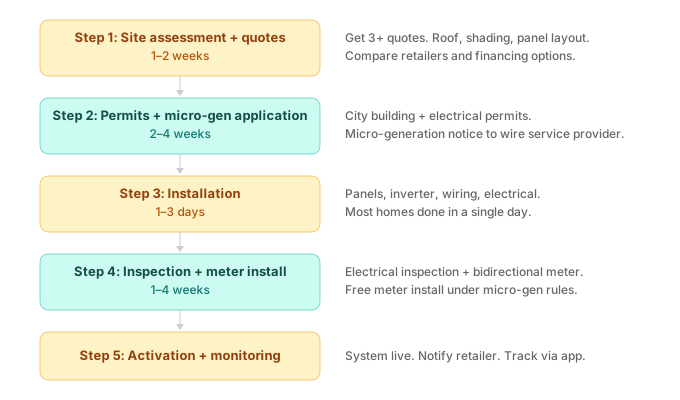
From first quote to flipping the switch - what to expectInstalling solar in Alberta follows a straightforward 5-step process. The entire timeline from first quote to system activation typically takes 6–12 weeks, depending on permit processing times in your municipality and your wire service provider’s scheduling.
Step 1: Site Assessment & Quotes (1–2 weeks)
Get at least 3 quotes from certified Alberta solar installers. Each will assess your roof orientation, shading, electrical panel, and energy usage to recommend the optimal system size. Compare not just price but also equipment quality, warranties, and whether they handle all permitting.
Step 2: Permits & Micro-Generation Application (2–4 weeks)
Your installer handles the city building permit, electrical permit, and submits a micro-generation notice to your wire service provider (FortisAlberta, ENMAX, EPCOR, or ATCO). If you’re using CEIP financing, your installer can often coordinate the application simultaneously.
Step 3: Installation (1–3 days)
The physical installation - mounting rails, panels, inverter, wiring, and electrical connections - typically takes just one day for a standard residential system. Larger or more complex installations (ground mount, flat roof, multiple arrays) may take 2–3 days.
Step 4: Inspection & Meter Installation (1–4 weeks)
After installation, a municipal electrical inspector verifies the work. Once passed, your wire service provider installs a free bidirectional meter - Alberta’s Micro-Generation Regulation prohibits utilities from charging for interconnection or meters. This is a significant advantage over some other provinces.
Step 5: Activation & Monitoring
Once the meter is installed, your system goes live. Notify your electricity retailer that you’re now a micro-generator. Most modern inverters come with monitoring apps so you can track production, consumption, and export in real time.
Choosing Solar Equipment for Alberta
Panels, inverters, and batteries - what works best in Alberta’s climateSolar Panels
Modern solar panels come in three main types: monocrystalline (highest efficiency, 20–22%), polycrystalline (slightly lower efficiency but more affordable), and thin-film (best for large commercial installations). For Alberta’s cold, sunny climate, monocrystalline panels are the most popular choice - their higher efficiency means more production per square foot of roof space.
Look for panels with strong cold-weather performance ratings and robust snow load tolerance. Canadian Solar, Silfab, and Q Cells are popular brands used by Alberta installers. Most quality panels come with 25–30 year performance warranties.
Inverters
The inverter converts DC power from your panels to AC power for your home. String inverters (one central unit) are the most cost-effective for roofs with good sun exposure and minimal shading. Microinverters (one per panel) are better for roofs with partial shading or multiple orientations, as they optimize each panel independently. Enphase microinverters and SolarEdge optimizers are the most common choices in Alberta.
Batteries
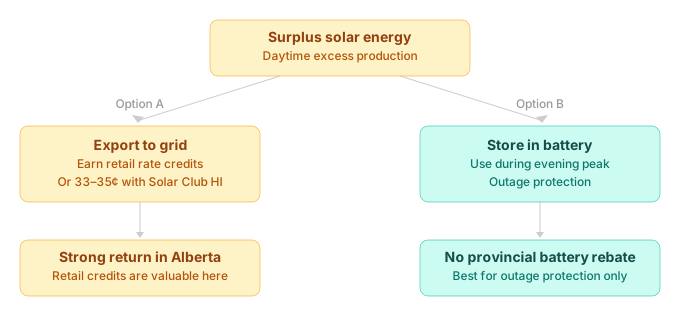
Alberta has no provincial battery rebate. Batteries make financial sense primarily for outage protection and Solar Club rate arbitrage - store when on the low import rate, and export when the high rate is active. A typical 10 kWh battery adds $10,000–$15,000 before any incentives and provides 8–12 hours of backup for essential loads during outages.
For most Alberta homeowners, grid export with retail-rate credits (or Solar Club’s 33–35¢/kWh HI rate) provides a better financial return than battery storage. Consider a battery if you experience frequent power outages or if you want to maximize Solar Club arbitrage.
Need help choosing the right equipment?
Connect with Alberta solar installers who can recommend the best panels, inverters, and battery options for your home and budget.
Common Myths About Solar in Alberta
Separating fact from fiction about solar energy in the prairies“Alberta doesn’t get enough sun for solar”
This is one of the biggest misconceptions. Alberta actually has more sunshine than almost any other Canadian province. Medicine Hat receives over 2,500 sunshine hours per year, and Calgary and Edmonton get 1,200–1,400 peak sun hours. Cold temperatures actually improve panel efficiency - panels produce more electricity per hour of sunlight in cold weather than in hot weather. Southern Alberta’s solar resource rivals parts of Germany, which is one of the world’s largest solar markets.
“There are no solar incentives in Alberta”
While there’s no provincial cash rebate like BC’s $10,000 or Ontario’s programs, Alberta offers a different set of advantages. CEIP provides $0-down property tax financing in 23+ municipalities. Banff offers up to $9,000 in rebates. Solar Club rate switching can nearly triple your export revenue. And paying only 5% GST (no PST or HST) saves $1,500–$2,200 on a typical installation compared to provinces with HST.
“The deregulated market makes solar too complicated”
The deregulated market actually benefits solar owners. You can choose retailers offering the best rates, switch to Solar Club for higher export revenue, and there’s no single utility bottleneck for approvals. Your wire service provider handles the meter installation for free under the Micro-Generation Regulation, and the interconnection process is straightforward.
“Solar panels don’t work in Alberta winters”
Alberta’s cold, clear winters are actually better for panels than hot summers. Panels operate more efficiently in cold temperatures, and snow typically slides off due to the panel angle and dark surface absorbing heat. Production does drop in winter months (December produces about 3% of annual total), but the annual total is among the best in Canada thanks to exceptional summer production.
“You need a battery to make solar work”
Unlike BC where the new 10¢/kWh export rate pushes homeowners toward batteries, Alberta’s retail-rate credits make grid export valuable. With standard micro-generation, you earn the same rate you pay. With Solar Club, you can earn 33–35¢/kWh during summer exports. A battery is nice for outage protection but isn’t necessary for strong financial returns in Alberta.
Top-Rated Alberta Solar Installers
Verified Alberta solar companies with real reviews
Kuby Energy
Edmonton, Calgary & across Alberta Residential & Commercial CEIP Approved
Solar Power Network
Calgary, Edmonton & southern Alberta Residential & Grid-Tied Solar Club Partner
Empower Energy
Red Deer, central & southern Alberta Residential & Agricultural Rural SpecialistsReady to go solar?
Compare quotes from Alberta’s top-rated solar installers. Our matching service is free, and there’s no obligation.
Get Free Solar Quotes Free, no-obligation quotes from verified installersAlberta Solar FAQ
Answers to the most common questions about going solar in AlbertaHow does net metering work in Alberta?
Alberta uses the Micro-Generation Regulation for net metering. When your solar panels produce more electricity than your home uses, the excess is exported to the grid and you receive credits at your retail rate - the same rate you pay for electricity. Credits accumulate monthly and offset future bills. Any unused credits after 12 months are paid out in cash. Your wire service provider (FortisAlberta, ENMAX, EPCOR, or ATCO) installs a free bidirectional meter to track your imports and exports.
What is the Clean Energy Improvement Program (CEIP)?
CEIP is Alberta’s PACE (Property Assessed Clean Energy) financing program. It lets homeowners finance up to 100% of their solar installation through their property taxes with no money down. Over 23 municipalities participate, including Edmonton, Calgary, Airdrie, and Lethbridge. Repayment terms extend up to 25 years, and the financing stays with the property - if you sell your home, the remaining balance transfers to the new owner. Interest rates are approximately 5.66–5.75% in Calgary as of 2026.
What is Solar Club and is it worth it?
Solar Club is an electricity rate program by Utility Network & Partners Inc. that’s unique to Alberta’s deregulated market. It lets micro-generators switch between a high export rate (~33–35¢/kWh) during sunny months and a low import rate (~8–9¢/kWh) during winter. This rate switching can nearly triple your export revenue compared to standard micro-generation credits, potentially cutting your payback period by 2–3 years. Solar Club has 92 Google reviews at 5.0 stars as of April 2026. It’s worth considering for most Alberta solar homeowners.
How much does solar cost in Alberta in 2026?
A typical residential solar installation in Alberta costs $2.50–$3.10 per watt before incentives. For common system sizes: a 5 kW system runs $12,500–$15,500, an 8 kW system costs $20,000–$24,800, and a 10 kW system costs $25,000–$31,000. Alberta’s GST-only tax (5%) means you save $1,500–$2,200 compared to provinces with 13–15% HST. Municipal rebates like Banff’s $450/kW program can reduce costs further.
Do I need a battery with solar in Alberta?
No. Alberta’s retail-rate net metering credits make grid export valuable, so a battery isn’t necessary for good financial returns. With Solar Club’s 33–35¢/kWh export rate, grid export can actually be more valuable than self-consumption. Batteries (typically $10,000–$15,000 for 10 kWh) make sense primarily for backup power during outages or for Solar Club rate arbitrage - storing energy at the low import rate and exporting at the high rate.
What municipal solar rebates are available in Alberta?
Several Alberta municipalities offer direct solar rebates: Banff provides $450/kW up to $9,000 for residential systems, Canmore offers $1,250 per home (lottery selection), Medicine Hat’s HAT Smart program provides $200/kW up to $1,000 (currently closed, expected to reopen in 2026), Wetaskiwin has $5,000 grants for businesses, and St. Albert offers a $1,400 CEIP incentive. Programs change frequently, so check your municipality’s website for the latest availability and application deadlines.
How long does a solar installation take in Alberta?
The entire process from first quote to system activation typically takes 6–12 weeks. Site assessment and getting quotes takes 1–2 weeks, permits and the micro-generation application take 2–4 weeks, the physical installation is usually done in 1–3 days, and the inspection plus bidirectional meter installation takes another 1–4 weeks. Your wire service provider installs the meter at no cost under the Micro-Generation Regulation.
What happens to my solar panels if I sell my house in Alberta?
Solar panels typically increase your home’s value. If you financed through CEIP, the remaining balance transfers to the new owner through the property tax assessment - this is a feature, not a bug, as the new owner also gets the electricity savings. If you paid cash or used a personal loan, the panels are yours to include in the sale price. Studies show solar homes sell faster and for higher prices than comparable non-solar homes.
Can I install solar on a condo in Alberta?
It’s possible but more complex. You’ll need approval from your condo board, and the system typically needs to be connected to common area metering or a specific unit’s meter. Some Alberta condos have explored community solar arrangements. For most condo owners, it’s worth raising the topic with your board and getting an installer’s assessment of feasibility.
Is Alberta’s 5% GST the lowest tax on solar in Canada?
Yes, tied with a few other jurisdictions. Alberta, along with the Northwest Territories, Nunavut, and Yukon, has no provincial sales tax - so you pay only the 5% federal GST on your solar installation. Most other provinces charge 13–15% HST (Ontario, Nova Scotia, New Brunswick, PEI, Newfoundland) or GST + PST (BC at 12%, Saskatchewan at 11%, Manitoba at 12%, Quebec at 14.975%). This tax advantage saves Alberta homeowners $1,500–$2,200 on a typical installation.
Incentive amounts, program eligibility, and electricity rates referenced in this guide are current as of April 2026 and subject to change. Verify details with your electricity retailer, wire service provider, or the Alberta Utilities Commission before making financial decisions.
Solar resources by province
Incentives, installers, and costs specific to your region


