
Success Story
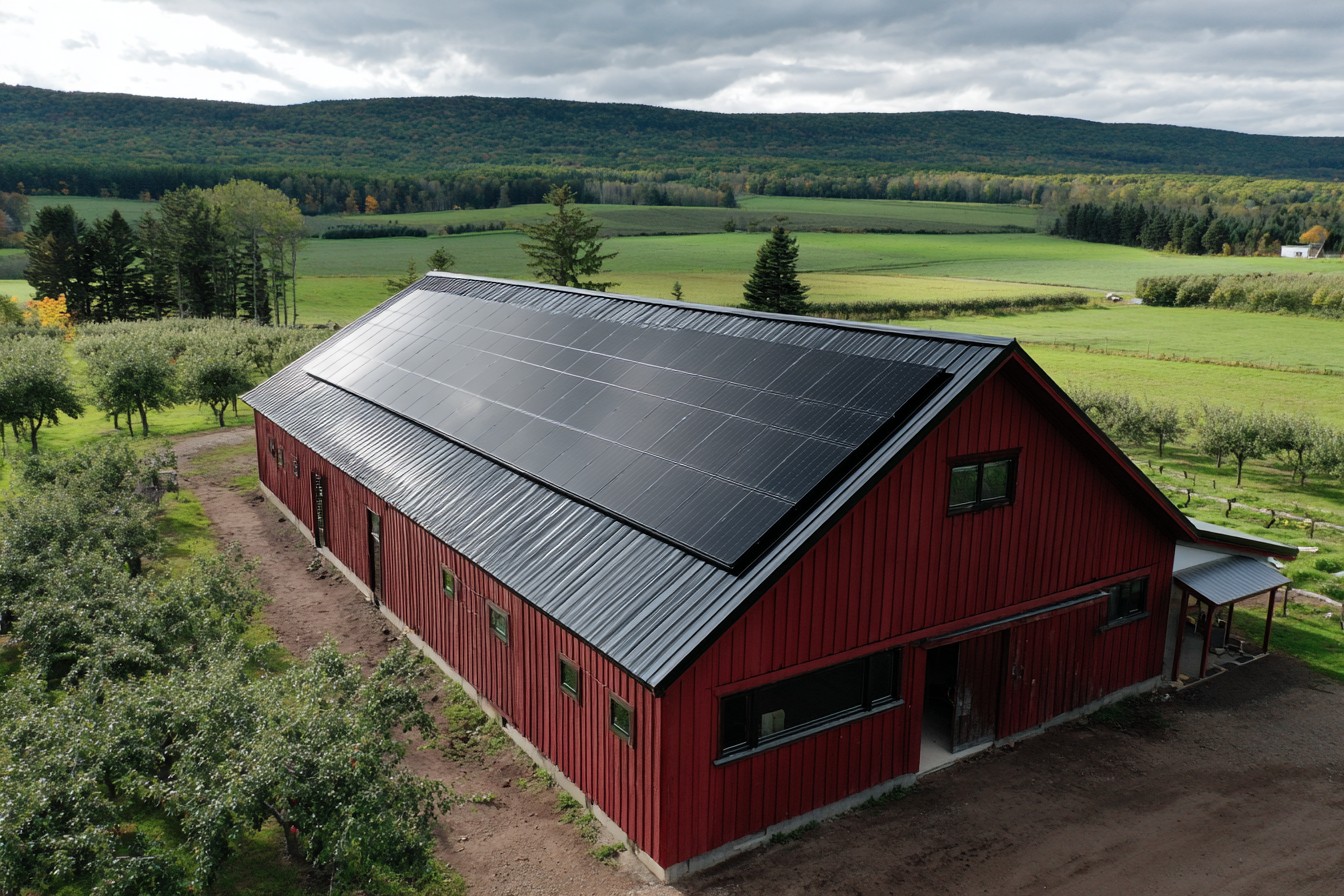
Nova Scotia Farmer Saves $22,000/Year After Converting Barn Roof to 40 kW Solar Array
With rising diesel and electricity costs threatening margins, an Annapolis Valley farmer invested in a commercial-scale rooftop system — and hit payback in just 5 years.
This scenario is based on typical agricultural solar installation data for Nova Scotia as of 2026. Names and specific details are illustrative. All financial figures are calculated from Nova Scotia Power commercial rate data, federal agricultural incentive programs, and commercial installer pricing. Actual results vary based on system size, roof condition, electricity consumption, and available incentives.
$22,000 per year in electricity savings. That’s what a representative Annapolis Valley mixed-crop farmer nets from a 40 kW solar array installed across the south-facing roof of a 4,000 sq ft barn. Before solar, the farm’s annual electricity bill exceeded $28,000 — powering irrigation pumps, cold storage, processing equipment, and two residential buildings. Nova Scotia farm solar at commercial scale changes the economics of agriculture in a province with some of the highest electricity rates in Canada.
The Challenge: $28,000/Year in Rising Energy Costs
A 200-acre mixed farm in the Annapolis Valley. Annual consumption: ~155,000 kWh. At NS Power’s ~18.2c/kWh, the annual bill exceeded $28,000. Electricity was the second-largest cost after labour.
Going Solar: The Installation
| Detail | Value |
|---|---|
| Location | Annapolis Valley, NS |
| Property | 200-acre mixed farm |
| System Size | 40 kW (96 x 415W) |
| Panels | Commercial bifacial |
| Inverter | String + optimisers |
| Battery | None (net metering) |
| Mount | Barn roof, south, 25 deg |
| Total Cost | $76,000 |
| CT ITC (30%) | -$22,800 |
| ACT Program | -$15,000 |
| Net Cost | ~$38,200 |
| Bill Before | ~$2,333/mo |
| Bill After | ~$500/mo |
| Annual Savings | ~$22,000 |
| Payback | ~5.2 years |
| Timeline | 6 weeks |
Bifacial panels: Snow albedo advantage on 4,000 sq ft barn roof.
No battery needed: NS net metering = grid as free battery.
Stacked incentives: CT ITC 30% + ACT Program cut cost in half.
Key Takeaway
Federal tax credit + ACT funding cut cost in half, dropping payback from 10+ to ~5 years. Agricultural solar benefits from incentive stacking unavailable to residential.
12 Months of Production
| Month | Solar | Consumption | Import | Bill |
|---|---|---|---|---|
| Jan | 1,800 | 11,000 | 9,200 | $1,674 |
| Feb | 2,400 | 10,500 | 8,100 | $1,474 |
| Mar | 3,600 | 11,500 | 7,900 | $1,438 |
| Apr | 4,400 | 12,000 | 7,600 | $1,383 |
| May | 5,200 | 13,500 | 8,300 | $1,511 |
| Jun | 5,600 | 14,000 | 8,400 | $1,529 |
| Jul | 5,800 | 15,500 | 9,700 | $1,765 |
| Aug | 5,000 | 16,000 | 11,000 | $2,002 |
| Sep | 3,800 | 14,500 | 10,700 | $1,947 |
| Oct | 2,600 | 13,000 | 10,400 | $1,893 |
| Nov | 1,600 | 12,000 | 10,400 | $1,893 |
| Dec | 1,200 | 11,500 | 10,300 | $1,875 |
| Total | 43,000 | 155,000 | 112,000 | $20,384 |
Without solar: ~$28,210/yr. With solar: ~$20,384/yr. Savings: ~$22,000/yr. System covers 28% of usage — the most expensive 28%.
Life After Solar
Barn roof was already there. No farmland sacrificed.
Cold storage aligned perfectly with afternoon peak solar production.
Insurance up ~$400/yr — minor against $22K savings.
Phase two planned: 20 kW on processing shed in 2027.
Considering Solar for Your Farm?
Agricultural solar qualifies for federal incentives residential can’t access. Get Your Free Solar Quote