
Ontario
Ontario’s ULO Rate Makes Solar + Battery a No-Brainer: 10x Price Arbitrage Explained
Charge your battery at 3.9¢/kWh overnight. Discharge at 39.1¢/kWh during peak. Ontario’s Ultra-Low Overnight rate changes the solar math completely.
Ontario’s Ultra-Low Overnight (ULO) electricity rate has created a pricing gap that makes solar battery storage one of the best residential energy investments in Canada. Under the ULO rate plan, overnight electricity costs just 3.9¢/kWh while peak hours hit 39.1¢/kWh – a tenfold difference. Pair that with Ontario’s $10,000 in combined solar and battery rebates, and the economics of Ontario solar battery storage in 2026 are dramatically better than even two years ago.
The ULO Rate: How the 10x Arbitrage Works
Ontario offers three residential electricity pricing plans. The ULO plan, introduced to encourage off-peak consumption, created an unintended gift for solar homeowners with battery storage:
| Rate Plan | Off-Peak/Overnight | Mid-Peak | On-Peak |
|---|---|---|---|
| ULO | 3.9¢/kWh (11pm–7am) | 11.5¢/kWh (7am–4pm, 9pm–11pm) | 39.1¢/kWh (4pm–9pm) |
| TOU | 7.6¢/kWh | 12.2¢/kWh | 20.3¢/kWh |
| Tiered | 10.3¢/kWh (first 1,000 kWh) | – | 12.5¢/kWh (above 1,000 kWh) |
The strategy is straightforward: charge your home battery from the grid overnight at 3.9¢/kWh. During the day, your solar panels power your home and top up the battery. From 4pm to 9pm – when ULO peak rates hit 39.1¢/kWh – discharge the battery instead of buying grid power.
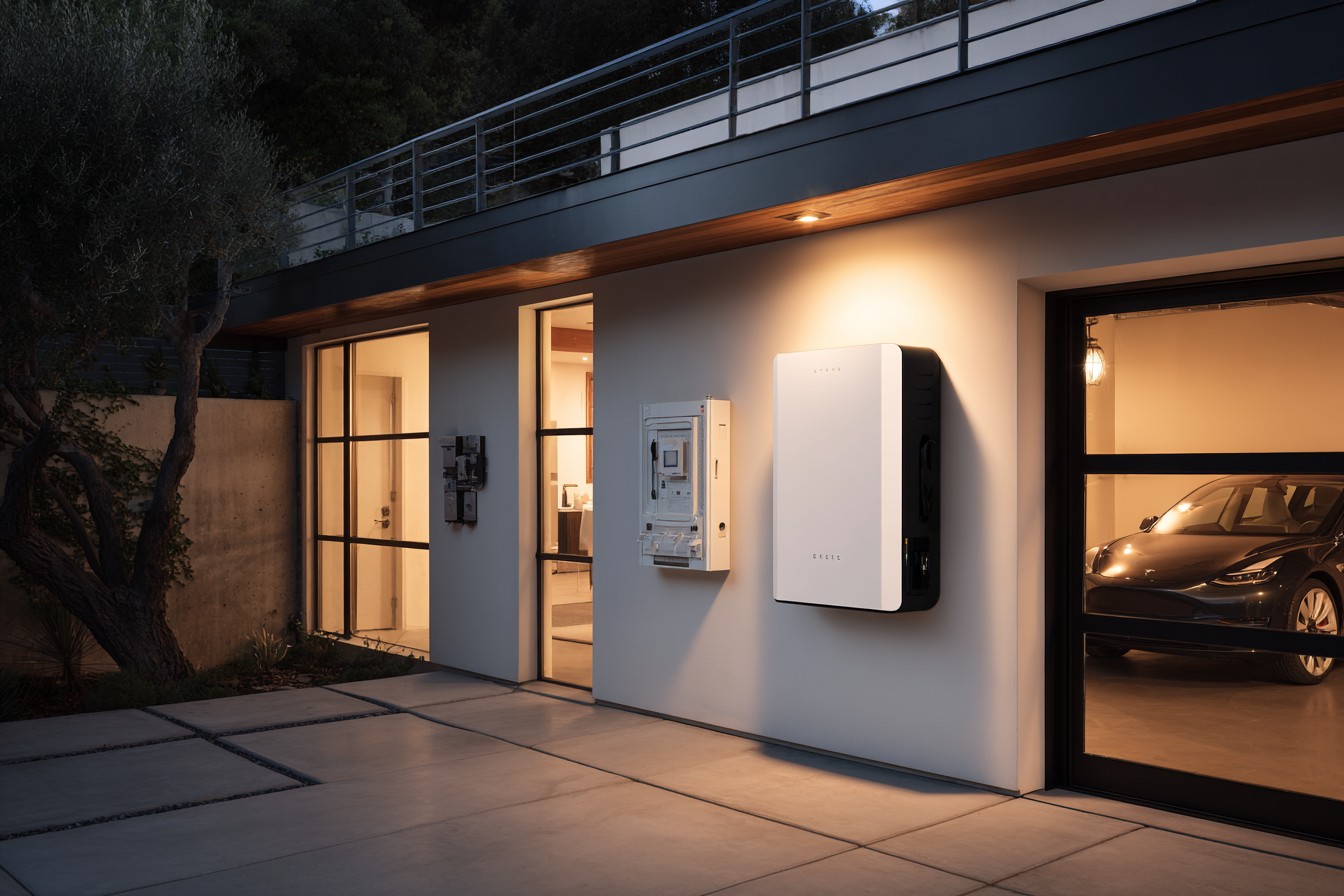
Every kilowatt-hour you shift from peak to overnight saves you 35.2¢. A 13.5 kWh battery (the size of a Tesla Powerwall or Enphase IQ Battery 5P) cycling daily shifts roughly 10 usable kWh per day. That’s $3.52 saved daily, or roughly $1,285 per year in avoided peak electricity costs – from the battery alone, before counting solar generation.
Key Takeaway
On Ontario’s ULO rate, a solar + battery system doesn’t just offset electricity use – it exploits a 10x pricing gap between overnight and peak hours. The battery pays for itself faster than the panels.
Ontario’s $10,000 Solar + Battery Rebate Stack
The Home Renovation Savings (HRS) Program provides:
- $5,000 rebate for solar PV systems
- $5,000 rebate for battery storage systems
- $10,000 total when you install both
Critical detail: the HRS program is designed for load displacement systems, meaning the solar and battery must be configured to power your home directly. Standard net metering systems do not qualify for the HRS rebate. Your installer must configure the system for self-consumption with load displacement rather than net metering export.
The program is funded through late 2026 but operates on a first-come, first-served basis. Once funding runs out, it’s gone. pv magazine reported on the program’s launch in January 2025, and uptake has been strong.
Running the Numbers: Solar + Battery ROI on ULO
Here’s the math for a typical Ontario home:
| Item | Cost / Savings |
|---|---|
| 8 kW solar system (installed) | $22,000–$28,000 |
| 13.5 kWh battery (installed) | $12,000–$16,000 |
| Total before rebate | $34,000–$44,000 |
| HRS rebate | -$10,000 |
| Net cost | $24,000–$34,000 |
| Annual solar generation savings | $2,400–$3,200 |
| Annual ULO battery arbitrage savings | $1,200–$1,300 |
| Total annual savings | $3,600–$4,500 |
| Payback period | 5.5–9.5 years |
Without the battery, a solar-only system on ULO pays back in 8–10 years. Adding the battery shortens the payback to as low as 5.5 years because you’re capturing that 35.2¢/kWh spread every single day.
After payback, the system generates $3,600–$4,500 in annual value for the remaining 15–20 years of its lifespan. That’s $54,000–$90,000 in lifetime savings on a $24,000–$34,000 investment.
What Happens Next
- Now through late 2026: HRS program accepting applications, first-come first-served. Apply before installing.
- 2026: IESO implementing enhanced models for hybrid solar + storage facilities as part of the Market Renewal Program. This may create additional revenue opportunities for residential battery owners.
- Ongoing: Ontario Energy Board reviews rate plans periodically. The ULO rate structure could change, but the fundamental gap between overnight and peak pricing is expected to persist as grid demand continues growing.
The IESO has flagged that a “considerable amount” of battery storage will be needed to meet Ontario’s rising energy demand. Residential batteries contribute to grid stability during peak hours – which means regulatory support for home storage is likely to increase, not decrease.
What You Can Do Right Now
- Switch to the ULO rate plan. Even without solar, if you can shift heavy electricity use (EV charging, laundry, dishwasher) to overnight hours, ULO saves money. With solar + battery, it’s transformative.
- Apply for the HRS rebate first. The program requires pre-approval before installation. Don’t start work without the rebate commitment in hand.
- Get quotes that spec for load displacement. Tell your installer you want the HRS-eligible configuration (load displacement, not net metering). This affects how the system is designed and wired.
- Get your free solar + battery quote from certified Ontario installers who understand ULO optimization.
Rate and incentive information current as of March 2026. Ontario electricity rates are set by the OEB. The HRS program is subject to available funding. Verify at oeb.ca and homerenovationsavings.ca.
See What Solar + Battery Saves You on ULO
The 10x rate arbitrage makes Ontario one of the best markets for residential solar + storage in Canada. Get Your Free Quote